Staking Plans Compared: Flat, Percentage and Kelly
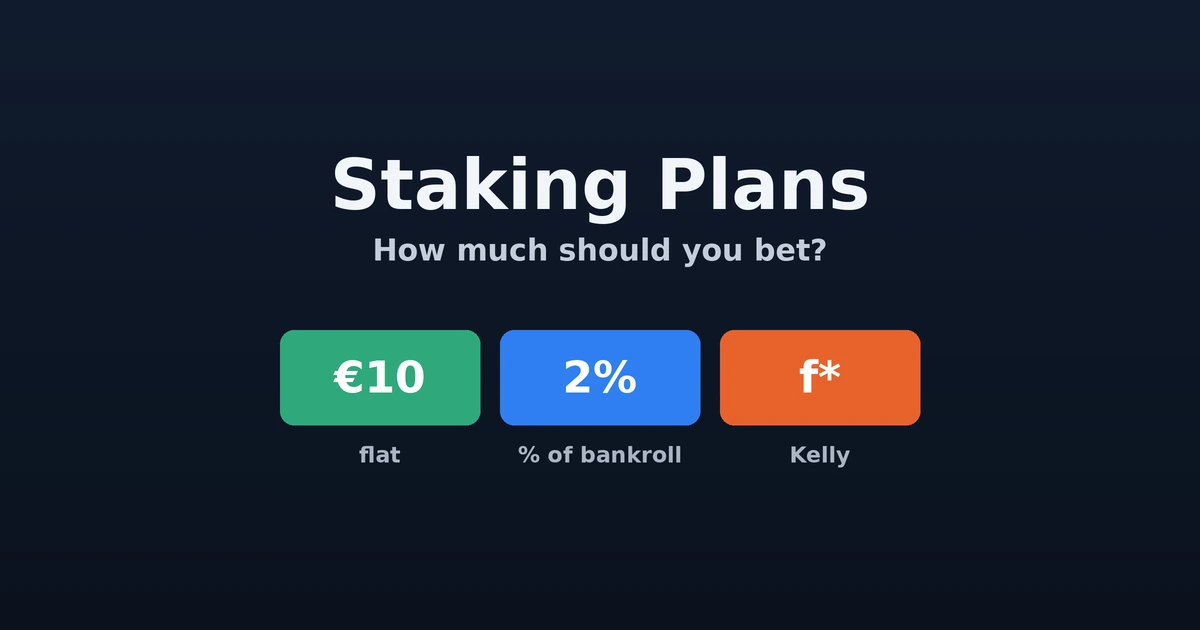
Your bankroll answers one question: how much money is set aside for betting. A staking plan answers the harder one: how much of it goes on each individual bet. It sounds like a technicality, but two bettors with identical picks can finish a season with completely different results purely because of how they sized their stakes. Here are the three classic staking plans — flat, percentage and Kelly — and how to choose between them.
What is a staking plan?
A staking plan is a fixed rule that decides your stake size before emotion gets a vote. Instead of €5 on one game and €50 on tonight's "sure thing", every bet is sized by the same method. That consistency is what makes your results measurable — and it's what stops one overconfident evening from undoing a good month. All three plans below assume you already have a dedicated bankroll: a set amount of money used only for betting. If you don't, start with our bankroll management guide first.
Flat staking: the same stake every time
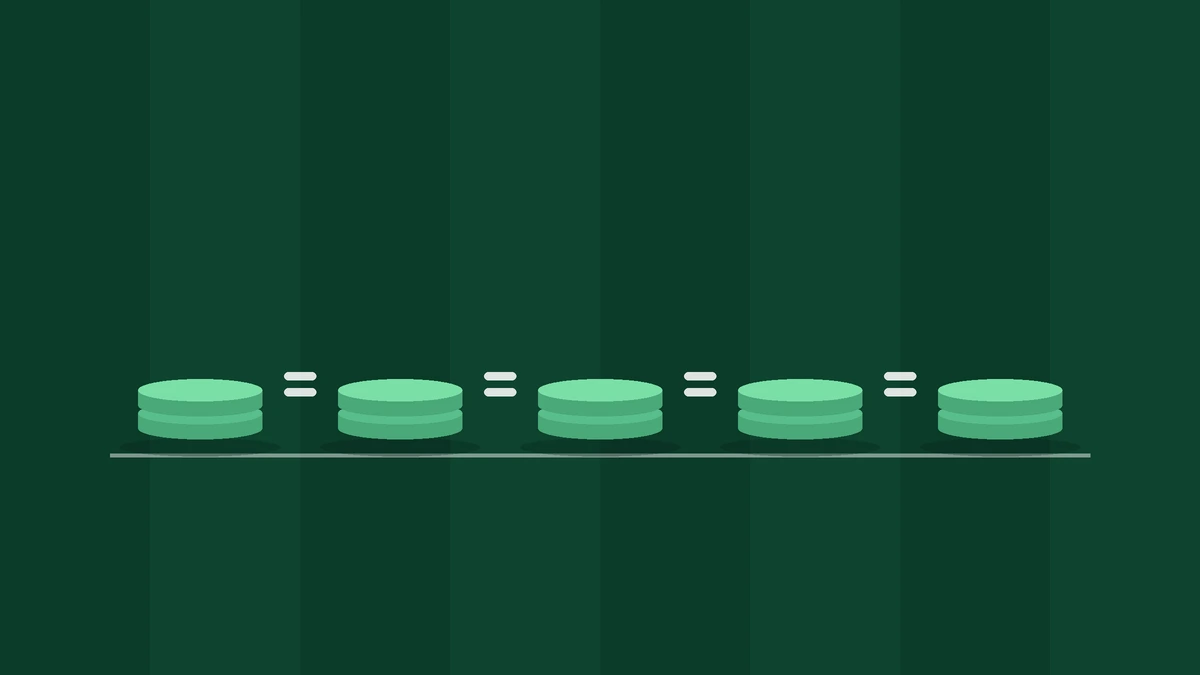
Flat (or level) staking is exactly what it sounds like: every bet gets the same fixed amount, usually defined as one "unit" worth 1–2% of your starting bankroll. With a €500 bankroll, that's €10 on everything — the strong favourite, the speculative underdog, all of it.
Its strengths are simplicity and honesty. There's nothing to calculate, discipline is built in, and your records become crystal clear: if you're profitable on flat stakes, it's your selections doing the work, not staking luck. The weakness is that it never adapts — stakes stay the same as your bankroll grows, and they don't shrink to protect you during a long losing run either. For your first few hundred bets, though, flat staking is the right default.
Percentage staking: a fixed slice of your bankroll
With percentage staking, each bet is a fixed percentage of your current bankroll — usually 1–3%. Start with €500 at 2% and your first stake is €10. If the bankroll climbs to €600, the next stake is €12; if it drops to €400, the stake shrinks to €8.
Stakes breathe with your results: they grow during winning runs and automatically contract when things go badly, which makes fully busting your bankroll mathematically almost impossible. The trade-offs are that digging out of a deep hole is slow — you're climbing back with ever-smaller stakes — and that every bet requires a quick calculation. Percentage staking suits bettors who've proven their discipline on flat stakes and want the built-in protection.

The Kelly Criterion: staking by the size of your edge
Kelly is the mathematician's answer. Instead of the same stake on every bet, you stake more when your advantage is bigger — and nothing at all when there isn't one. The formula: stake % = (p × b − q) / b, where p is your estimated probability of winning, q is the probability of losing (1 − p), and b is the decimal odds minus 1.
An example: the odds are 2.00 (so b = 1) and you believe the true chance is 55%. Kelly says (0.55 × 1 − 0.45) / 1 = 0.10 — stake 10% of your bankroll. And if your estimate matches the bookmaker's price exactly, the formula returns zero: no edge, no bet. That's arguably the most instructive thing about Kelly — it refuses to bet without value.
The catch is twofold. Kelly is only as good as your probability estimates — feed it guesses and it confidently sizes bets on nonsense. And full Kelly is brutally volatile, with bankroll swings most people can't stomach. That's why serious bettors use fractional Kelly — half or a quarter of the recommended stake — and why Kelly only makes sense once you genuinely estimate probabilities yourself, for example from an xG-based model, rather than by feel.

Which staking plan should you use?
If you're new, use flat stakes — your first job is finding out whether your selections win at all, and flat staking measures that honestly. Once your records show consistent, disciplined betting, percentage staking adds automatic protection and lets profits compound. Fractional Kelly is the end-game: a precision tool for bettors who produce their own probability estimates and can emotionally handle the swings.
One warning applies to all three: a staking plan manages risk — it cannot create profit. If your bets have no value, the cleverest staking system in the world only decides how quickly you lose. The plan protects the bankroll; value is what grows it.
Final thoughts
Staking is where good bettors quietly beat talented but chaotic ones. Start flat, graduate to percentage when your discipline is proven, and treat Kelly as a scalpel for the day you have real probability estimates of your own. Whichever you choose, the golden rule is the same: pick the plan before the bet, and never let a single match talk you out of it.
Please gamble responsibly. Only stake what you can afford to lose.