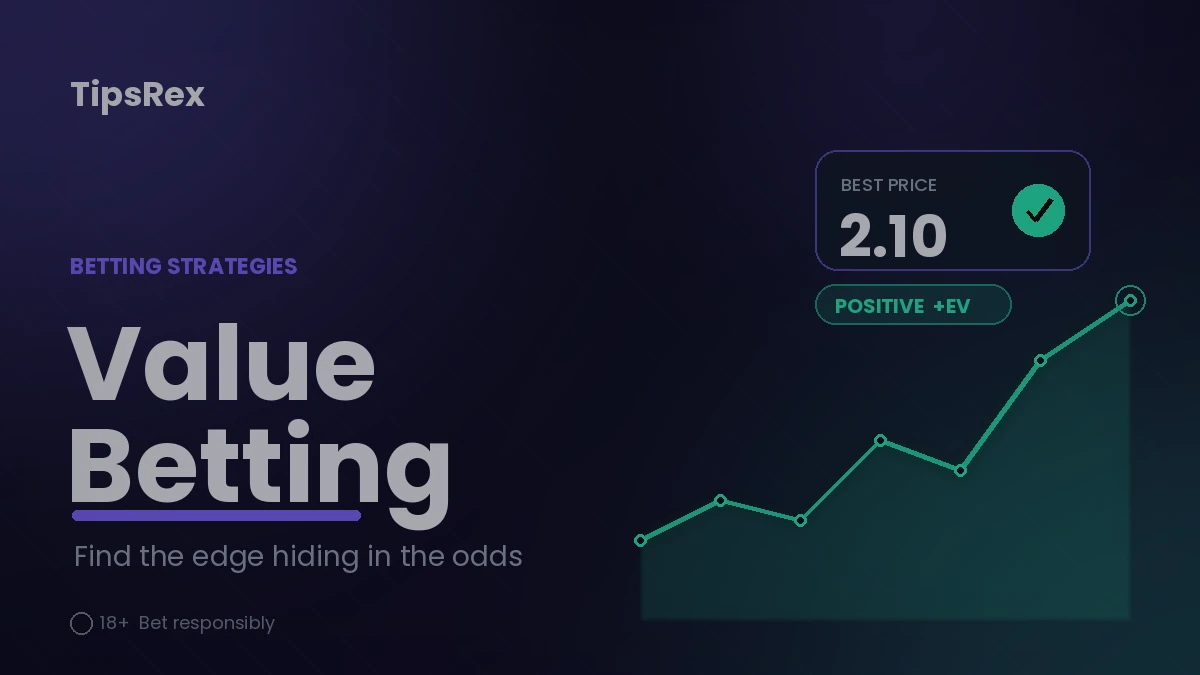
Value betting is the one idea that separates people who win over time from people who just get lucky now and then. Strip away the jargon and it comes down to a single question: are these odds bigger than the real chance of the outcome happening? If they are, you have a value bet — whether or not it goes on to win.
What "value" actually means
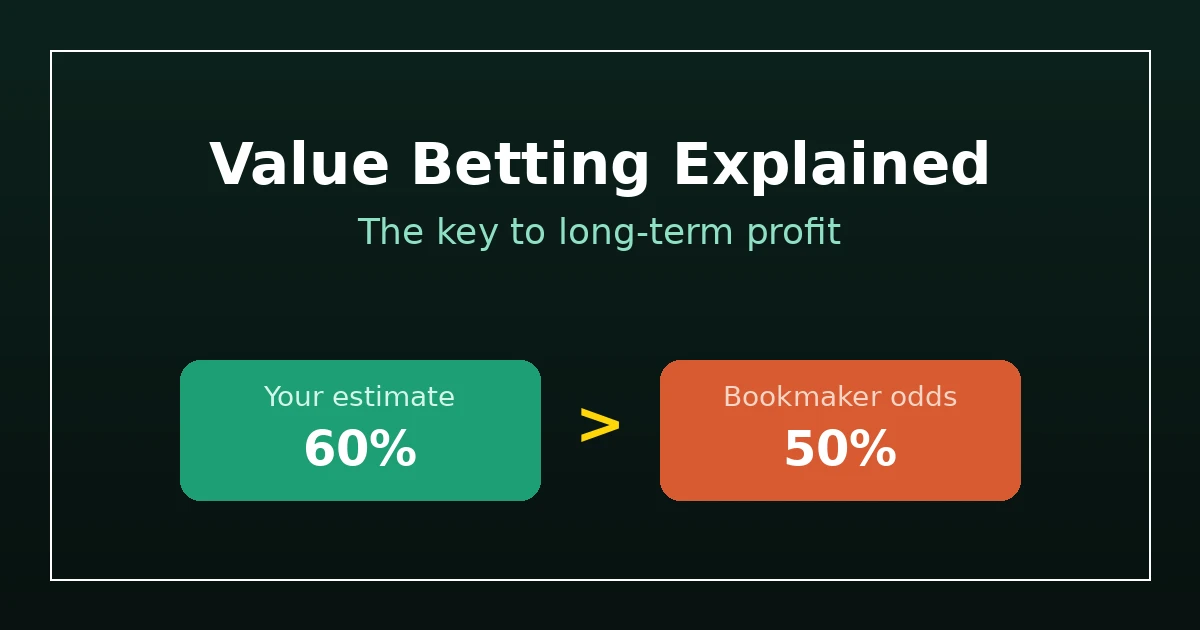
Every price a bookmaker offers carries an implied probability. You can turn decimal odds into a percentage with one quick sum: divide 1 by the odds. So 2.00 implies 50%, 4.00 implies 25%, and 1.50 implies roughly 67%.
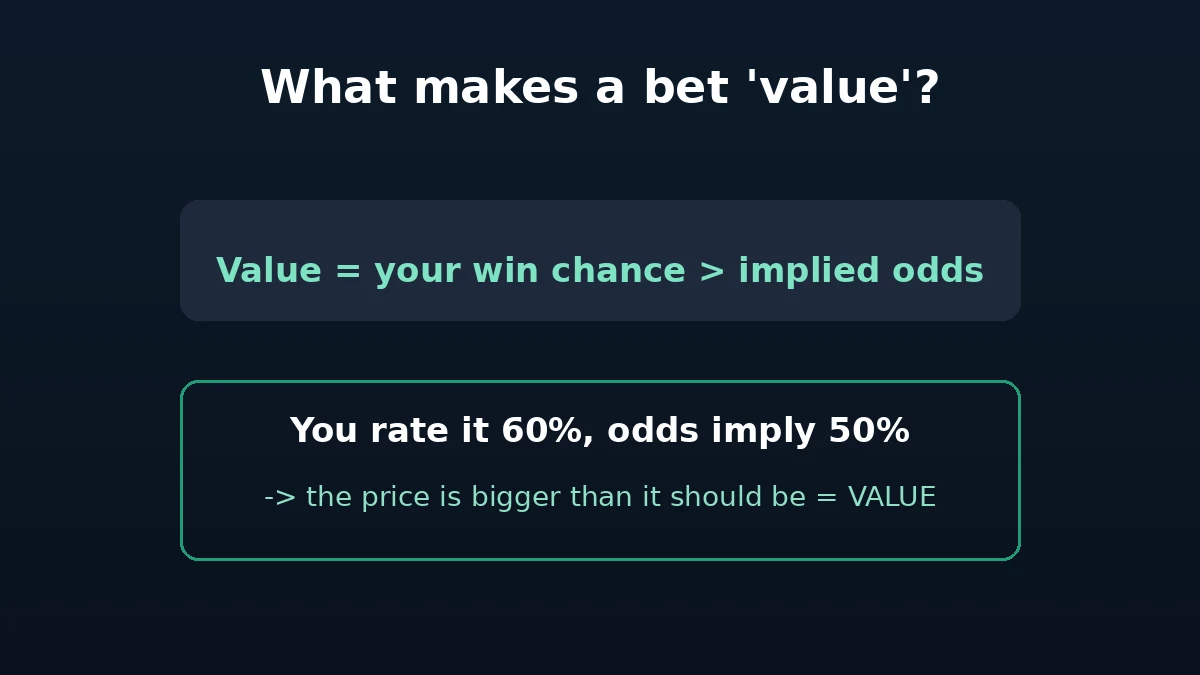
A value bet exists when your own estimate of the chance is higher than the chance baked into the price. If you think a side wins 55% of the time but the odds of 2.10 only imply about 48%, the bookmaker is paying you more than the outcome is really worth. That gap is your edge — and it is the only thing that matters in the long run.
The maths in one line
The tool behind value betting is expected value (EV): the average result you would get if you could place the same bet thousands of times. The formula is friendlier than it looks.
EV = (your win chance × profit if it wins) − (your lose chance × stake)
Say you back a team at 2.10 with a €10 stake and you genuinely believe they win 55% of the time:
- Win: 0.55 × €11 profit = €6.05
- Lose: 0.45 × €10 stake = €4.50
- EV = €6.05 − €4.50 = +€1.55 per bet
A positive number means the bet is worth making. A negative one means you are quietly paying the bookmaker for the privilege — no matter how "obvious" the pick feels.
How to actually find value
1. Form your opinion before you look at the odds
Decide what you think the real chance is from recent form, head-to-head history, injuries and underlying numbers such as expected goals (xG). Only then compare it with the market. Looking at the price first quietly anchors your judgement to the bookmaker's.
2. Shop around
Different bookmakers price the same game differently. Always take the biggest available odds for your selection — over a full season, that single habit can turn break-even months into winning ones.
3. Specialise
You will find more value in a lower league you follow closely than in the Champions League, where thousands of sharp bettors have already squeezed every price. Depth beats breadth.
4. Judge the process, not the result
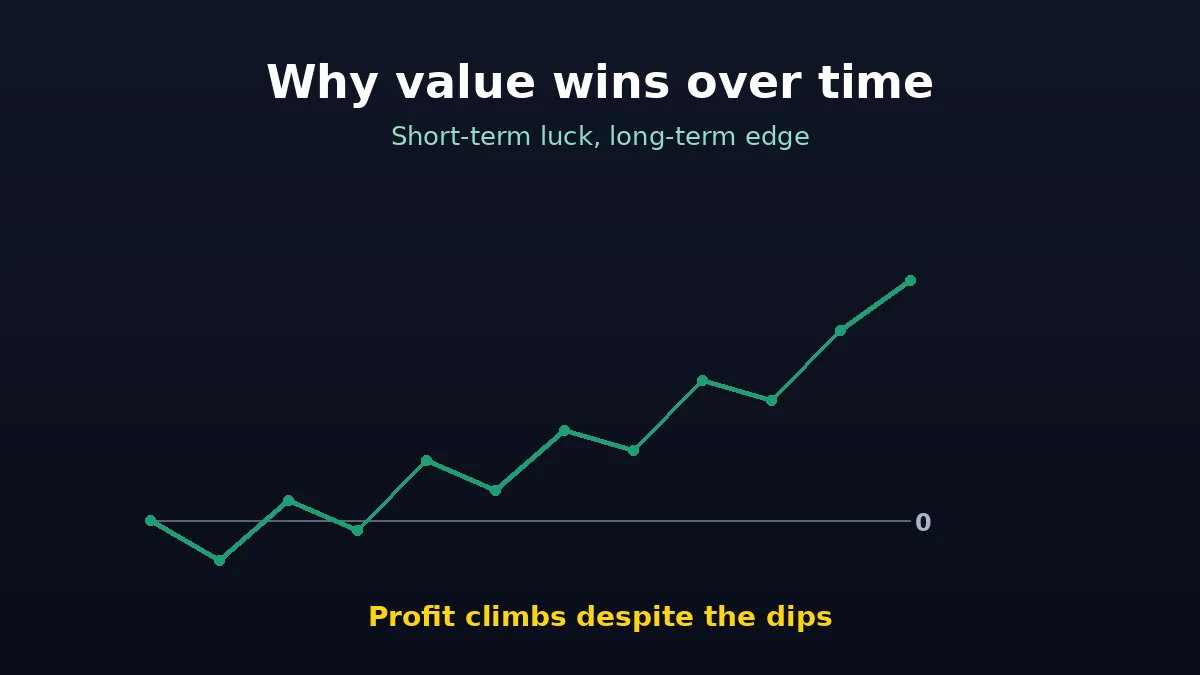
A value bet can lose and still be the right bet; a poor bet can win and still be a mistake. Record everything, compare your prices with the closing odds, and let a big enough sample tell you whether your edge is real.
Mistakes that quietly drain a bankroll
- Backing favourites blindly. Short odds are not the same as value — a 1.20 shot is poor value if its true chance is only 80%.
- Chasing losses. Raising stakes to win money back wipes out bankrolls faster than any bad pick.
- Ignoring the margin. The bookmaker's built-in vig means the prices already lean against you before you place a single bet.
Stake sensibly
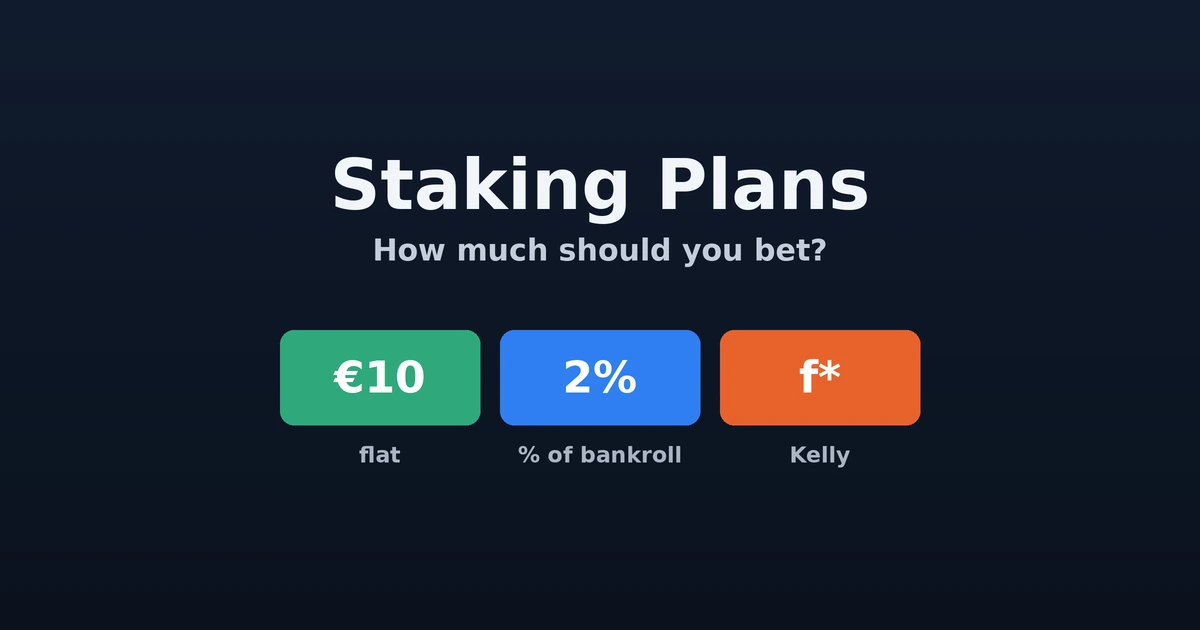
Value tells you what to bet; staking tells you how much. Keep each bet to a small, fixed share of your bankroll so a bad run never knocks you out. Plenty of bettors use flat stakes or a cautious fraction of the Kelly criterion rather than betting on feel.
The bottom line
Value betting is not about calling more winners than everyone else. It is about repeatedly paying less than something is worth and letting the maths do the work. Find prices that are too big, stake sensibly, and tune out the noise of any single result.
Please gamble responsibly. Only stake what you can afford to lose.