Both Teams To Score (BTTS) Explained
Walk into any football betting market and you'll find "Both Teams To Score" sitting near the top of the list — and for good reason. It's simple, it's fun to follow, and you don't even need to pick a winner. As long as both sides put the ball in the net, your bet lands. Here's everything you need to know about how BTTS works, when it wins, and how to find the matches worth backing.

What is Both Teams To Score (BTTS)?
Both Teams To Score, usually shortened to BTTS, is a football bet on whether both teams will find the net at least once during the match. You're not betting on the result, the scoreline or who wins — only on whether each side manages to score.
It's a straightforward two-way market: you back either Yes (both teams score) or No (at least one team fails to score). That simplicity is a big part of why it's become one of the most popular markets in football betting.
When does BTTS win?
The bet settles on one simple question: did both teams score? If the answer is yes, "BTTS Yes" wins. If even one team is kept off the scoresheet, "BTTS No" wins.
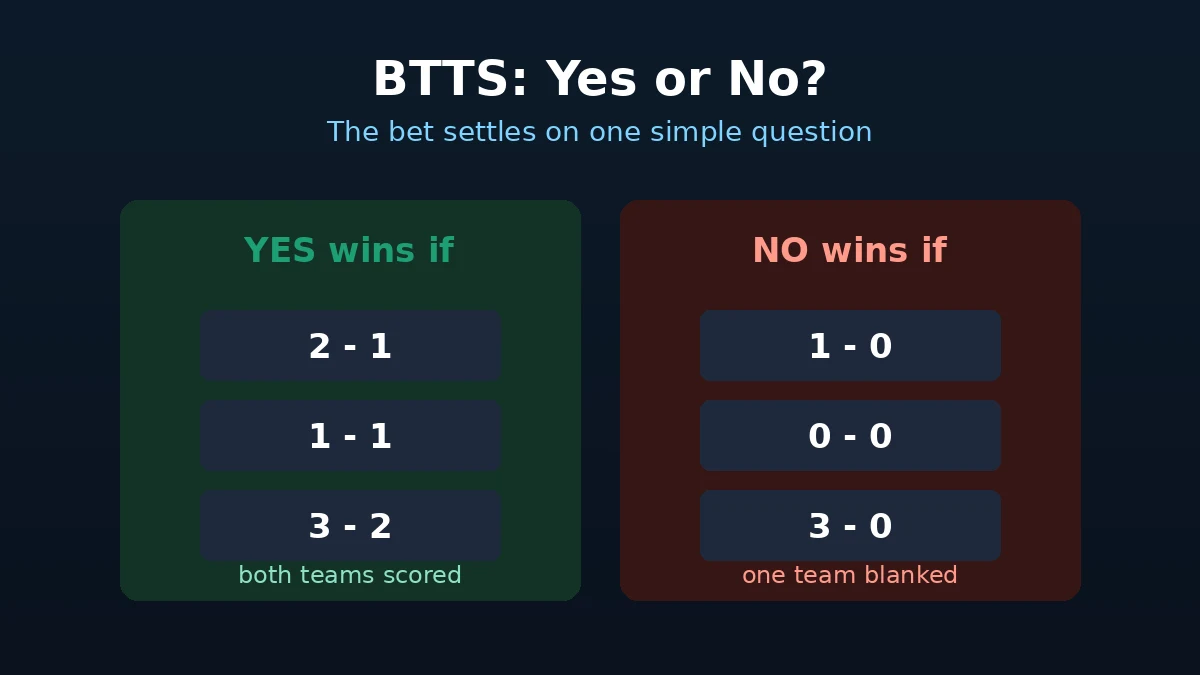
So a 2–1, 1–1 or 3–2 result all settle BTTS Yes, because each team scored at least once. Meanwhile 1–0, 0–0 or 3–0 settle BTTS No, because one side was shut out. The actual winner of the match is completely irrelevant to how the bet pays — only the goals matter.
Why is BTTS so popular?
BTTS appeals to bettors for a few clear reasons. You don't have to predict a winner, which removes a lot of the guesswork from tight, unpredictable matches. It keeps a game exciting from the first whistle to the last, because every goal either side scores moves you closer to a win. And the odds on BTTS Yes are often appealing in attacking fixtures, offering solid value when you've picked the right game.
When to bet BTTS Yes
The key to BTTS is spotting matches where goals at both ends look likely. A few signals point toward a strong "Yes" bet.
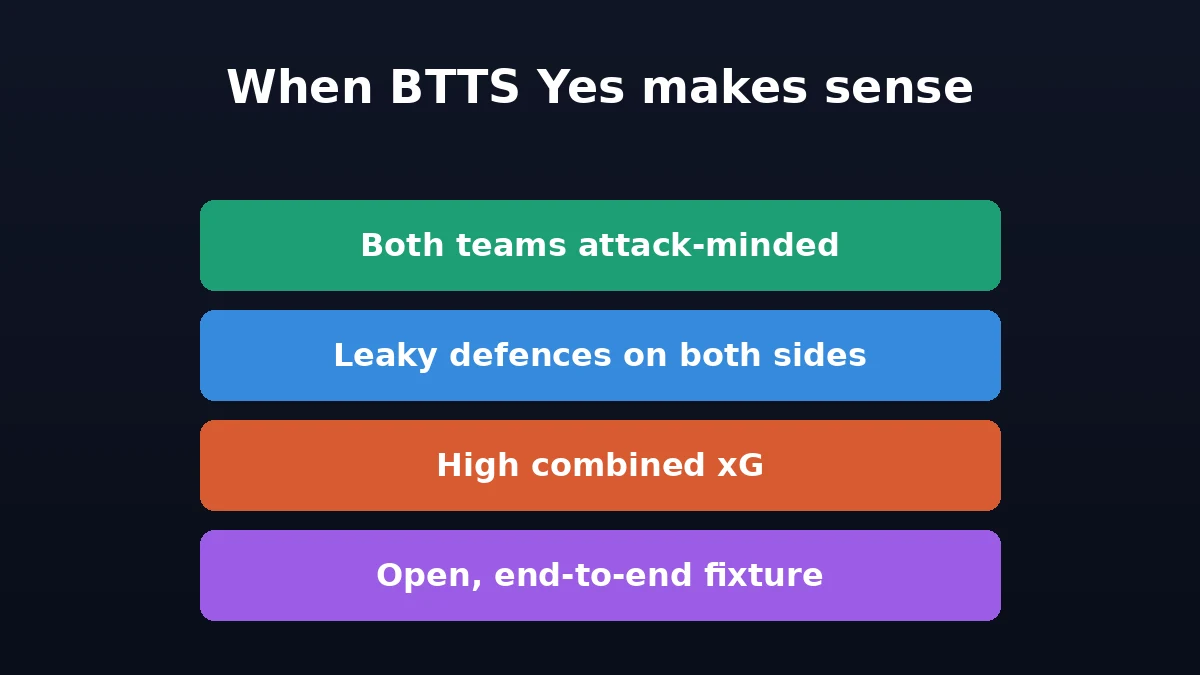
Look for fixtures where both teams are attack-minded and regularly score, where both defences are leaky and concede often, and where the combined xG (expected goals) is high. Open, end-to-end matches between two ambitious sides are classic BTTS Yes territory. Conversely, when a strong defensive team faces a side that struggles to score, BTTS No often looks the smarter play.
Tips for betting BTTS
- Check recent BTTS records. Many stats sites show how often each team's matches end with both teams scoring.
- Use xG, not just goals. A team creating lots of chances is likely to score even if recent results don't show it.
- Mind the team news. A missing key striker or a returning first-choice keeper can swing a BTTS market.
- Combine with other markets. BTTS pairs naturally with Over/Under goals for a fuller picture of a high-scoring game.
Final thoughts
Both Teams To Score is one of the simplest and most enjoyable ways to bet on football. You don't need to call the winner — just judge whether goals will flow at both ends. Lean on attacking form, defensive weaknesses and expected goals to find the right matches, and BTTS becomes a genuinely useful market rather than just a fun punt. As always, keep your stakes sensible and treat it as part of a wider, disciplined approach.
Please gamble responsibly. Only stake what you can afford to lose.