What Is Asian Handicap Betting? A Beginner's Guide
Ask serious football bettors where their money goes and the answer is rarely the standard match winner market. It's the Asian Handicap — a market that removes the draw, brings one-sided fixtures back to life and usually offers better odds than 1X2. It looks intimidating at first glance, with its quarter-goal lines and split stakes, but the logic underneath is surprisingly simple. Here's how it all works.

What is an Asian Handicap bet?
An Asian Handicap bet gives one team a virtual head start and the other a virtual deficit before kick-off. The favourite carries a minus handicap (such as -1), the underdog a plus handicap (such as +1), and the bet is settled on the score after the handicap is applied to the real result.
The defining feature: on most lines the draw is removed as a betting outcome. Instead of juggling three possible results, you only need a view on two — and that changes how the whole market behaves.
How the handicap works
Picture the league leaders at home to the bottom club. The 1X2 price on a home win is too short to be worth taking, so the handicap asks a harder question instead: can they win by enough?
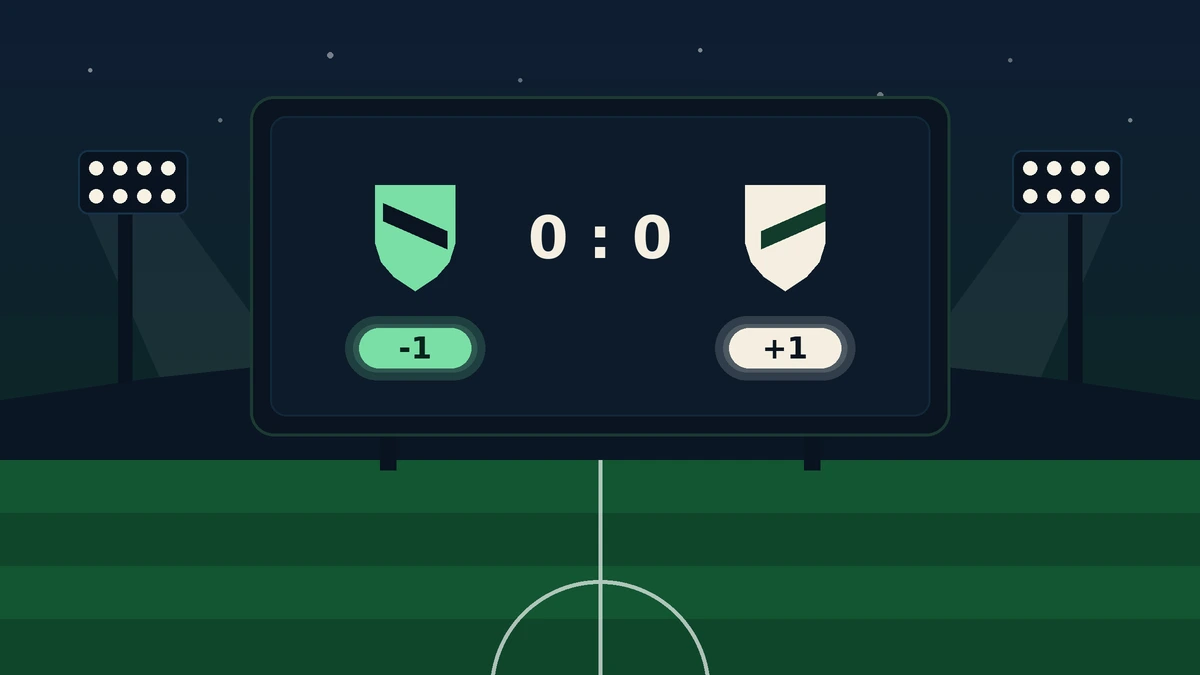
Say you back the favourites at -1. Take the actual final score and subtract one goal from their total:
- They win 3-1 — adjusted score 2-1, so the bet wins.
- They win 2-1 — adjusted score 1-1, a draw on the handicap, so your stake is refunded.
- They draw or lose — the bet loses.
Backing the underdog at +1 is the mirror image: the bet wins if they win or draw, the stake comes back if they lose by exactly one, and it only loses if they're beaten by two or more.
That refund is called a push, and it can only happen on whole-number lines. Half and quarter lines settle differently — and that's where the market gets clever.
Whole, half and quarter lines
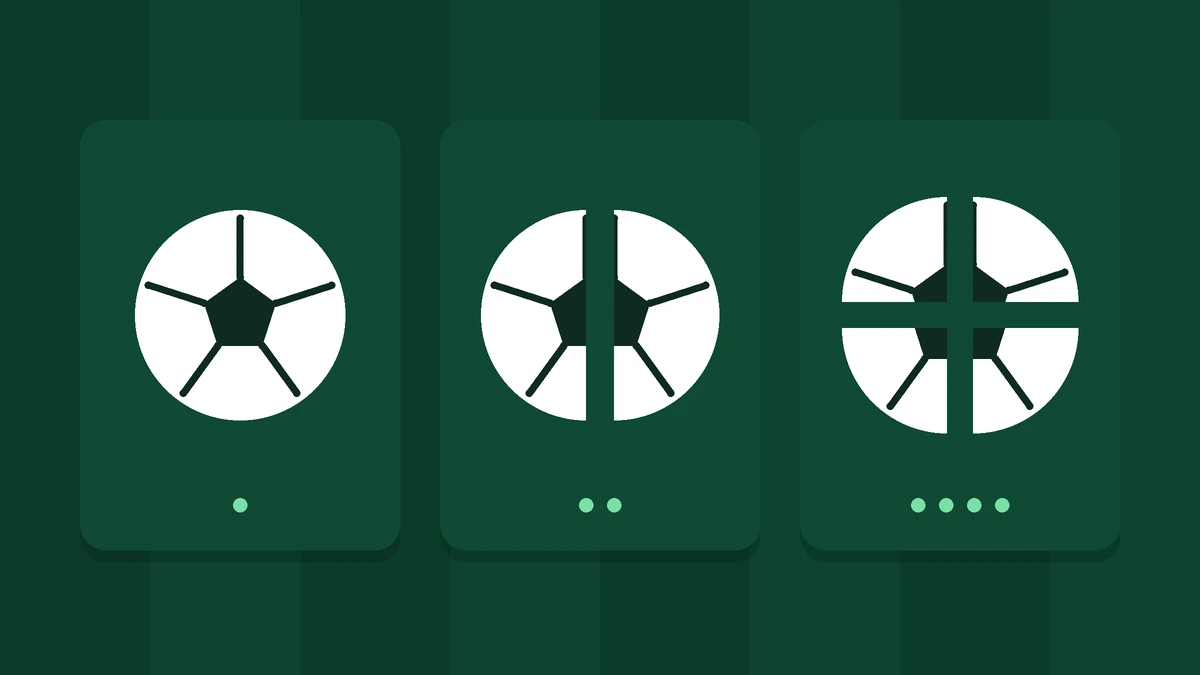
Whole lines (0, -1, -2 and so on) can end in a push, as in the example above. The special case is the level handicap (0): you win if your team wins, get refunded on a draw and lose if they lose — exactly the same as a Draw No Bet.
Half lines (-0.5, -1.5, +0.5 and so on) can never push, because nobody scores half a goal. Every bet settles as a clean win or loss: -0.5 simply means your team must win the match, while -1.5 means they must win by two clear goals.
Quarter lines (-0.25, -0.75, +1.25 and so on) are the part that confuses newcomers — your stake is automatically split between the two neighbouring lines.
Quarter lines: one bet, two halves
A quarter handicap quietly splits your stake in half across the lines either side of it. Back a team at -0.75 with €100 and you're really holding two bets: €50 at -0.5 and €50 at -1.
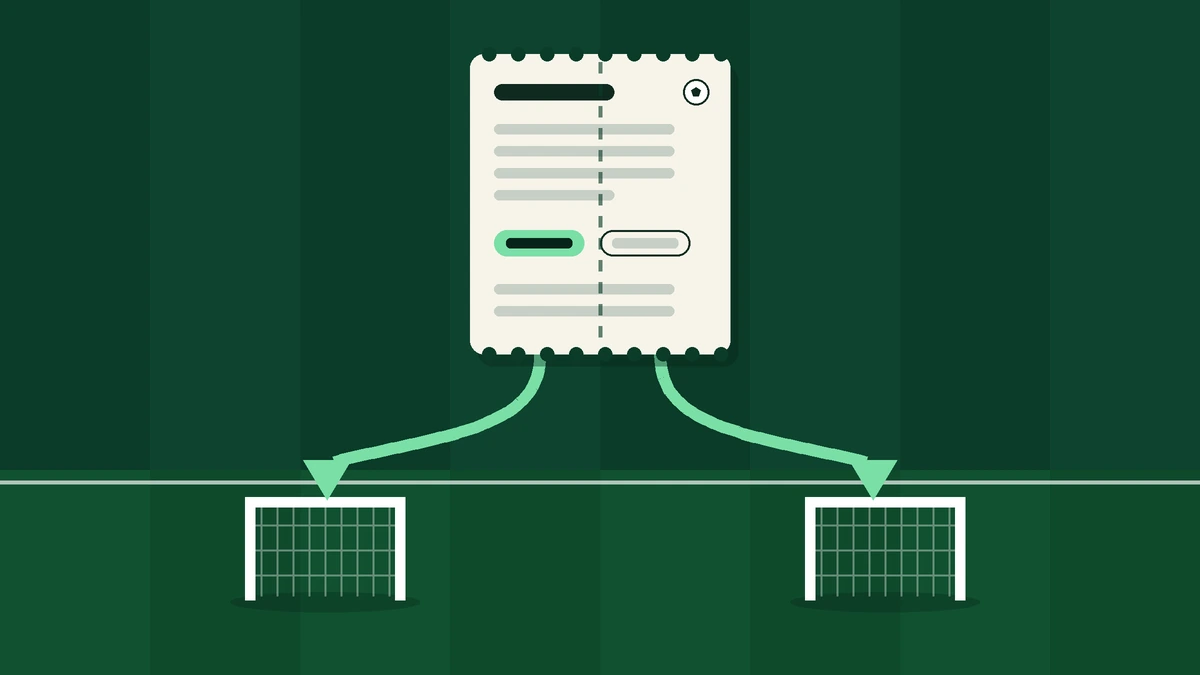
The possible outcomes:
- They win by two or more — both halves win, so you collect the full payout.
- They win by exactly one — the -0.5 half wins and the -1 half is refunded, a half win.
- They draw or lose — both halves lose.
The same logic produces half losses on other lines: back a team at -0.25 and a draw refunds the 0 half while the -0.5 half loses, costing you half your stake. Bookmakers sometimes display quarter lines as a split — "0, -0.5" instead of -0.25 — but it's exactly the same bet.
Why serious bettors prefer this market
- Lower margins. Bookmakers generally build less profit into Asian lines than into the 1X2 market, so the odds sit closer to the true probabilities.
- Two outcomes instead of three. With the draw out of the way, you only need to judge which team is stronger — not whether a stalemate sneaks in and ruins everything.
- A line for every opinion. From a cautious +0.5 on an underdog to an aggressive -1.75 on a rampant favourite, there's a handicap to match your exact read on any game.
How it connects to markets you already know
If you've read our guides to the Double Chance and Over/Under markets, you already understand more of this market than you think. A level handicap is Draw No Bet in different clothing. Backing an underdog at +0.5 covers the same outcomes as a Double Chance on them, often at a better price. And the same whole/half/quarter logic powers Asian totals — Over/Under lines like 2.25 or 2.75 that split your stake in exactly the same way.
Final thoughts
The Asian Handicap boils down to one idea: adjust the score, then settle the bet. Whole lines can refund your stake, half lines always produce a winner, and quarter lines split your money between the two. Master those three rules and you've unlocked the market where most of the world's sharpest football money is traded — with fairer odds and no draw to trip you up.
Please gamble responsibly. Only stake what you can afford to lose.